

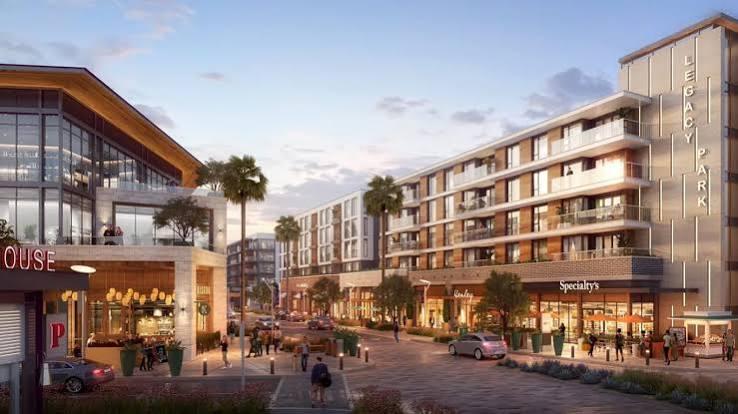
On September 15, the Mesa City Council unanimously approved a development agreement for Legacy Park and Gateway Crossing. The vote was not close, and it was not contested. At roughly $3 billion in private investment, this is the largest private project in Mesa history. Moreover, the council paired the agreement with annexation, zoning changes, an infrastructure agreement, and a new theme park district. Vestar’s 200-acre plan now has a clear runway.
Photo Credit: AZ Big Media
What Actually Gets Built
The site sits east of Ellsworth Road near Mesa Gateway Airport, between State Route 24 and Williams Field Road. Plans call for a 600-room luxury resort and a 150-room boutique hotel. Add 400,000 square feet of retail, restaurant, and fitness space. There is also 3.8 million square feet of office space and 2,261 apartments. Meanwhile, a 20-acre public park and a pedestrian tunnel under Williams Field Road anchor the public side. Construction is expected to begin in early 2028, with the first phase opening in October 2029.
The Numbers Mesa Is Betting On
Applied Economics projects $58.8 billion in economic activity over 30 years. The same analysis estimates more than 13,500 jobs and $1.4 billion in city tax revenue. Thirty-year forecasts from paid consultants always deserve a raised eyebrow. However, the financing structure is the part worth noticing. Developers advance the public infrastructure costs and get reimbursed from tax revenue the project itself generates. In other words, Mesa is not writing a blank check up front.
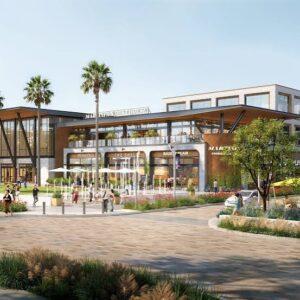
Photo Credit: AZ Central
Another Chapter in the Mesa Revival
For years, Mesa was treated as the quiet neighbor in this valley. That reputation is badly out of date. Semiconductor suppliers have planted flags along the Gateway corridor. Data centers followed. Downtown, ASU’s Mesa City Center campus turned a sleepy Main Street into something with foot traffic and a pulse. Legacy Park is not an outlier, then. It is the latest entry in a decade-long run of Mesa saying yes to things.
The Contrast Is Hard to Miss
Meanwhile, other Valley cities spend years litigating whether a project belongs. Mesa took a generational proposal, ran it through the process, and approved it without a dissenting vote. Reasonable people can debate incentives, traffic, and water. Still, there is a lesson in a council that can actually decide something.
Mesa has room to grow and the political will to use it. Legacy Park is what that combination looks like on paper. In 2029, residents will find out what it looks like in concrete.
Mesa deserves praise for approving a project whose time has come, as judged by the enthusiasm from elected officials and those that they represent.
Discover more from Arizona Progress Gazette
Subscribe to get the latest posts sent to your email.