

By Alexander Lomax
David Schweikert is gone. The longtime Republican congressman vacated Arizona’s 1st Congressional District to run for governor, and the seat he held since 2011 is now a free-for-all. It has favored Democrats in seven of the last nine statewide or presidential contests since 2020. Both primaries reflect that uncertainty: crowded, competitive, and unresolved.
The Republican Primary: Trump’s Kicker and the Field
Jay Feely, a former Arizona Cardinals kicker backed by Trump, leads the Republican field in fundraising with more than $1.2 million in cash on hand. He raised nearly $750,000 in the most recent quarterly period. The endorsement came after former Arizona GOP Chair Gina Swoboda entered the race with an initial Trump nod, then pivoted to a secretary of state run after the president issued a second endorsement for Feely.
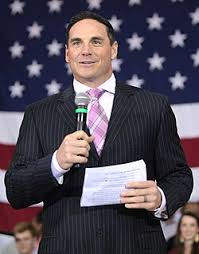
Jay Feely. Photo Credit: Wikipedia
Feely’s political resume is thin. His campaign website leans heavily on athletic accomplishments and lists no endorsements beyond the president’s. He also committed an early stumble, originally announcing a run in a different district before pivoting to CD1.
Former state Rep. John Trobough holds just under $400,000 in cash on hand, while former state Rep. Joe Chaplik has cleared $265,000. Chaplik, a six-year legislative veteran, has argued he has both district familiarity and conservative credibility to win without a celebrity endorsement.
Chaplik has ingratiated himself to much of the district by being a conservative stalwart in the state capitol, and will likely have the most legitimate grassroots support. This is reflected in polling, most of which show him as the frontrunner. That said, it would generally be difficult to see a way that the highest fundraiser by a long shot who also holds the coveted Trump endorsement would lose a Republican primary, but perhaps this is a watershed moment where Trump’s endorsement doesn’t equal victory in a Republican primary.
The Democratic Primary: Two Familiar Faces and Institutional Muscle
The Democratic side is similarly unsettled. Marlene Galán-Woods, a former TV journalist, had raised $1.13 million through year-end and held $557,000 in cash. Amish Shah, a physician and former state lawmaker who lost to Schweikert by about 16,500 votes in 2024, had raised roughly $1 million with $644,000 on hand, though he loaned himself $185,000 of that total.
The DCCC has added Galán-Woods to its “Red to Blue” program, designating her as a top-tier candidate and providing organizational and fundraising support. That is a significant institutional advantage, though Shah has argued his near-miss in 2024 and name recognition give him a durable base.
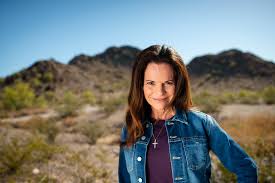
Jonathan Treble has caused some waves by plowing in a ton of his own money into this race and with a Super PAC supporting him that is taking shots at Shah. Rick McCartney made some waves with an AI-enhanced commercial. They are fighting for 3rd place in this race though.
Due to his notoriety for knocking on every door, Shah is the presumed front-runner until shown otherwise. But Galán-Woods’s performance will be a good test of if 1) Democrats want a fresh shot, and 2) if the national Democrats hold any sway. Recent results imply that Democratic primary voters aren’t convinced by the national party.
The Bottom Line
CD1 is genuinely open. The district leans slightly blue in presidential years but has rewarded Republicans in midterm cycles. That said, this election is likely to be a reaction to Trump and relatively poor economic conditions. This may be the Democrats’ best opportunity to win this district, so the Democratic primary is even more important than normal.
Discover more from Arizona Progress Gazette
Subscribe to get the latest posts sent to your email.