

By Ronald Sampson
Scottsdale Unified’s board votes Tuesday on closing more schools. Days earlier, the Maricopa County Attorney’s Office found the district violated the open meeting law while drawing up the options. Four weeks later, voters will decide whether to hand the same district $375 million through a bond.
A Decade of Losing
The enrollment trend is not subtle. According to AZ Free News, SUSD has lost roughly 6,000 students since 2010. Over that stretch, it had closed only one school. Figures differ by source and time frame, but every one points down.

Charter and private schools have taken many of those families. A 2019 analysis found that charters inside district boundaries added about 6,200 students over nine years. Meanwhile, SUSD lost nearly 3,800. In a market this competitive, the district keeps coming up short.
Closing Is Not a Strategy
Each closure option would save roughly $2.6 million to $2.7 million. That is real money. However, shrinking the footprint does not win back a single student.
The district’s answer to losing is to close the building and move on. Phase I shuttered Pima and Echo Canyon. Phase II could close more, and district leaders have said additional rounds may follow if enrollment keeps falling. Yet the public record shows little in the way of a plan to compete. Where are the signature programs, the enrollment targets, and the campaign to win families back?
District leaders say they will invest in thriving schools. Fair enough, but voters have not been shown what that means for retention.
Then Comes the Ask
On Nov. 3, voters will see a $375 million bond. That is 63% larger than the $229 million bond approved in 2016. According to ABC15, it would cost owners of a $600,000 home about $157 a year. The money would go to repairs, security, technology, and cooling systems at more than two dozen schools, with no new construction.
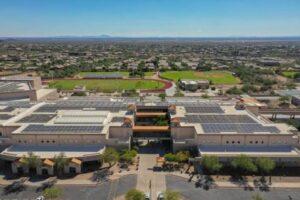
The ballot will also ask for authority to sell, lease, or exchange district property. Moreover, the district has not said what it will do with the campuses it closes. Taxpayers are being asked to fund upgrades while the district shrinks its own map.
The Real Referendum
Capital needs are legitimate, and aging buildings do not fix themselves. Still, a $375 million request deserves a harder question than “is this school old?”
Before voters sign the check, they should demand a plan. How do they intend to compete in this new scholastic ecosphere? How will the district stop the bleeding? What happens to closed campuses? And why should a process the county says broke the law earn their trust?
Discover more from Arizona Progress Gazette
Subscribe to get the latest posts sent to your email.