

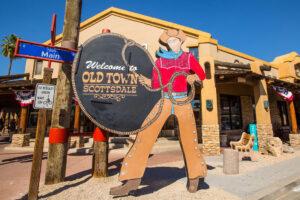
Photo Credit: Arianna Grainey
The numbers looked fine last year. More than 11 million visitors came to Scottsdale in 2024, generating a record $3.7 billion in economic impact and supporting over 36,000 local jobs. City officials were justifiably proud. That baseline matters now, because what is happening in 2025 and 2026 cuts directly against it.
The United States recorded roughly 4 million fewer international visitors in 2025: a 5.5 percent drop that wiped out over $8 billion in foreign visitor spending nationally. The cause is not a global travel slowdown. Worldwide, international tourism grew by roughly 80 million trips last year. America is simply losing the competition.
The Canadian Problem Is Arizona’s Problem
Preliminary numbers show Canadian visitation to Arizona down roughly 19 percent in 2025. That is not a rounding error. Canadians are not just staying home: they are actively rerouting to Mexico, the Caribbean, and Europe. An ASU supply chain expert noted the decline stems in part from animosity toward the Trump administration and frayed relations between the two countries.
For Scottsdale, this is pointed. Canadian snowbirds and resort visitors are among the city’s most reliable and highest-spending guests. They arrive in winter and spring, when Scottsdale’s hospitality economy peaks. Local businesses that depend on long-term international visits are already navigating more uncertainty than they have seen since the pandemic.

The Jobs and Revenue Are Already Moving
The damage is not theoretical. A CEPR research paper found that by mid-2025, businesses in areas with the highest share of Canadian visitors employed roughly 6 percent fewer workers than comparable less-exposed markets. That translates directly to restaurants, retail shops, spas, and tour operators in Old Town and along Scottsdale Road.
The city’s fiscal exposure runs deeper than most residents realize. Nearly 94 percent of Scottsdale’s bed tax collections come directly from tourists. That revenue funds parks, public facilities, and destination marketing. Nationally, lodging tax revenue growth is expected to slow significantly and may stagnate through 2026. Scottsdale is not exempt from that trend.
What the City Can Do
Experience Scottsdale anticipates hotel occupancy of 64 percent in 2026, down slightly from 65 percent in 2025: modest declines that mask growing pressure on smaller operators who cannot absorb softening demand the way large resorts can. The city’s best near-term lever is doubling down on domestic feeder markets: Dallas, Los Angeles, Chicago, and the Mountain West. Arizona’s diversified tourism portfolio: outdoor adventure, luxury resort travel, golf, and cultural heritage: is a genuine asset right now, and one worth marketing aggressively.
The Bottom Line
Scottsdale built a $3.7 billion tourism economy by being extraordinary at attracting visitors. The international retreat is real, it is already affecting employment and tax revenue, and it is not going to reverse quickly. The city that markets itself most aggressively to domestic travelers in the next 18 months will be best positioned when international tourism eventually normalizes. Scottsdale should be at the front of that line.
Discover more from Arizona Progress Gazette
Subscribe to get the latest posts sent to your email.