

By Alexander Lomax
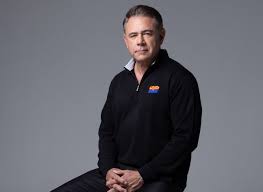
Hugh Lytle. Photo Credit: Axios
If you needed a clean illustration of how the two-party system works to protect itself, look no further than what is happening right now to Hugh Lytle’s campaign for Arizona governor. Lytle, a Scottsdale businessman running under the label of what was previously called the No Labels Party, is facing two separate legal challenges designed to remove him from the 2026 ballot entirely. The message from Arizona’s political establishment is familiar: independents are welcome to register, but not to actually compete.
The more troubling of the two challenges carries a strong partisan scent. Lytle claims Governor Katie Hobbs is behind a challenge filed by Craig Beckman. The law firm representing Beckman, Coppersmith Brockelman, has represented Hobbs in past election challenges. Hobbs’s former chief legal advisor, Bo Dul, now works at that firm and is one of the attorneys on the case. The Hobbs campaign has declined to comment. That silence is telling.
The Setup Was Already Stacked
Before the legal challenges even arrived, both major parties had already worked to undermine the independent effort. Secretary of State Adrian Fontes, a Democrat, had approved a name change from No Labels to the Arizona Independent Party. That was reversed by a court just days before the candidate filing deadline. Both Republican and Democratic interests backed that reversal. The name mattered those who have not chosen on of the two main parties, ostensibly independent voters, are nearly the largest voting bloc in the entire state. This is a fundamentally independent-thinking state.
The parties killed that. Then the lawyers arrived.
The Numbers Tell the Story
The cynicism here is hard to overstate. As of January, roughly 34% of Arizona voters are registered with no party affiliation. Nearly 44% of Americans identify as independent nationally. That is not a fringe constituency. It is a massive bloc of voters in the state. Yet the structural barriers to independent candidacy are enormous. Unaffiliated candidates need around 45,000 signatures to qualify for the ballot statewide. Major party candidates need roughly 7,000. Lytle’s path through the No Labels Party required only about 1,800. That narrower path is precisely why both parties want it closed off.
The Democratic Party’s Particular Problem
Republicans have long used procedural barriers to crowd out third-party competition. That is a well-documented feature of conservative electoral strategy. But the Democratic Party likes to present itself as the defender of voting rights and democratic participation. Attempting to remove a candidate who collected over 5,900 signatures and represents a constituency of hundreds of thousands of unaffiliated voters fits uneasily with that self-image. Hobbs won her 2022 race by roughly 17,000 votes. She is not acting out of principle here. She is acting out of arithmetic.
What This Is Really About
Lytle’s campaign may well have legitimate signature problems. Those deserve fair scrutiny in court. But the coordinated effort to challenge not just Lytle but multiple No Labels and Green Party candidates simultaneously reveals the broader intent. Political consultant Chuck Coughlin put it plainly: both major parties will use every lever at their disposal to make independent campaigns more difficult. That is not democracy. It is incumbent protection dressed up as legal process. Arizona voters deserve better than a ballot curated by the two parties most invested in keeping it narrow.
A Positive Update
On Friday a judge threw the first challenge out, a positive sign that an unaffiliated judiciary sees this for what it is: political games. Will the other charge follow the same fate? That is being heard in court with a decision to come within days, so stay tuned.
Another Update: the challenge that presumably was initiated in conjunction with the Hobbs campaign has been thrown out.
Discover more from Arizona Progress Gazette
Subscribe to get the latest posts sent to your email.