

Photo Credit: AZ Big Media
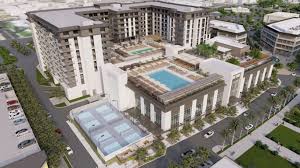
The Valley of the Sun has long been synonymous with luxury living and wellness retreats, but a groundbreaking development rising from the ashes of Paradise Valley Mall suggests Phoenix may be redefining what integrated wellness luxury actually means. Life Time Living Paradise Valley, which broke ground in late October 2025, represents something fundamentally different from the high-end resorts and luxury condos that dot the region: it’s the first fully integrated residential-athletic club concept in Arizona.
The 11-story, 327-unit community scheduled for completion in 2027 doesn’t just position itself near wellness amenities; it makes them inseparable from daily life. Every resident receives a Life Time Signature membership providing full access to the adjacent 92,000-square-foot athletic country club, connected by a pedestrian bridge. Between the residential tower and athletic club sits an audacious nearly 1.5-acre rooftop beach resort; the kind of amenity that sounds lifted from a Miami development brochure but will materialize in the desert.
Life Time has been refining this model since debuting Life Time Living Coral Gables in Florida in 2021, with subsequent communities in Green Valley, Nevada, Burlington, Massachusetts, and Stamford, Connecticut. Paradise Valley marks the company’s bet that Arizona represents ideal territory for wellness-driven luxury living at scale.
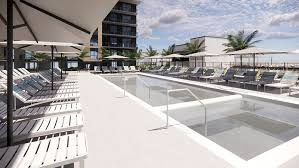
Photo Credit: theljc.com
Yet claiming Paradise Valley (or the broader Phoenix metro) as “the new capital” of this lifestyle requires examining what else is happening locally. Our area boasts impressive wellness infrastructure, from the five Phoenix-area resorts ranking among Travel + Leisure’s top Arizona properties in 2025 to developments like Mountain Shadows and Sanctuary Camelback Mountain, both emphasizing art, design, and wellness. The first downtown Phoenix hotel with a full-service spa, Denū Hotel & Spa, opens late 2026 with 22,000 square feet of meeting space and comprehensive wellness programming.
What’s notably absent, however, are direct competitors to Life Time’s integrated model. The Valley features extraordinary luxury developments: Summit by Olson Kundig at Camelback Mountain and Silver Sky’s prestigious 12-home community are two. That said, these emphasize architectural prestige and location over wellness integration. Even VAI Resort, the new project built in conjunction with the Arizona Cardinals complex in Glendale, focuses on entertainment, concerts, and dining rather than positioning wellness as the central organizing principle.
For Paradise Valley to become a true capital of wellness-driven luxury living, several elements would need to align; commercial success, increased competition, and surrounding infrastructure. The bones are certainly there. We already attract health-conscious residents, offer 300 days of sunshine annually, and have a demonstrated appetite for luxury living. Life Time’s track record suggests they’ve done their homework. But transforming from a city with an impressive wellness development into the wellness-luxury capital requires sustained ecosystem development…not just one spectacular project, however innovative.
Discover more from Arizona Progress Gazette
Subscribe to get the latest posts sent to your email.