

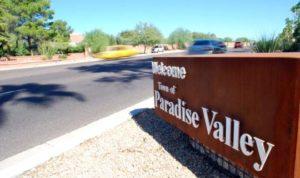
Paradise Valley Town Council is changing how it distributes community service funding, and residents should understand what this means for local nonprofit organizations and the broader community. At its December 11 work session, the council heard a proposal to adopt a hybrid approach combining requests for proposals with needs-based assessment for allocating these funds.
What’s Being Considered
For fiscal year 2025, the council has allocated $265,000 to community services, though that number is somewhat misleading. The town combines funds for homelessness with the general community services fund, and for the past two fiscal years, the council earmarked $200,000 to the Maricopa Association of Governments homeless initiatives. If that same amount goes to MAG this year, only $65,000 remains for other community organizations.
The proposed process would involve two council members selected by Mayor Mark Stanton working with the town manager’s office to review applications. Their recommendations would then go to the full council for approval. This represents a return to elements of the town’s pre-2021 system, which relied solely on requests for proposals from 2015-2020.
Why the Change
From 2021 to present, the town moved to a needs-based assessment approach. The hybrid model aims to balance competitive grant applications with strategic assessment of community needs. As Councilwoman Anna Thomasson emphasized during the session, there’s growing interest in documenting how funding directly benefits Paradise Valley residents rather than the broader region.
This represents a shift in philosophy. Mayor Stanton acknowledged the importance of considering Paradise Valley’s position in the greater community, noting “we can’t forget that we’re part of a bigger community and that we should be part of a solution-driven space” when discussing groups like Central Arizona Shelter Services that serve the broader Valley.
What Residents Should Know
Paradise Valley has supported community service agencies since 1985, with 40 different organizations receiving funding over the years. Recent consistent recipients include MAG homeless initiatives, Duet Partners in Aging, and Central Arizona Shelter Services. Others like Arizona Friends of Foster Children, Voices for CASA Children, Scottsdale Unified School District Foundation, and McCormick-Stillman Ranch Railroad Park have also benefited.
Here’s what makes this discussion significant: Paradise Valley operates from an exceptionally strong financial position. The town’s 2025 fiscal year saw revenues of $58 million against expenses of $36 million, resulting in a $22 million excess contributed to general fund strategic reserves. The town derives about 35% of revenue from resort taxes, 15% from construction sales tax, 10% from investment income on strategic reserves, and under 10% from state shared revenue, a revenue diversity that gives the town substantial financial flexibility that many neighboring communities lack.
The question isn’t whether Paradise Valley can afford to support community services: it clearly can. The question is philosophical: Should an affluent town of roughly 14,000 residents primarily fund services that directly benefit its own population, or should it contribute to regional solutions for challenges like homelessness that don’t respect municipal boundaries?
The hybrid approach may represent a reasonable compromise, allowing both competitive grant applications and strategic needs assessment. However, residents should pay attention to how this plays out in practice. Will the focus on demonstrating direct town benefits squeeze out worthy regional causes? Or will Paradise Valley continue recognizing its role in supporting the broader community ecosystem?
As the council moves forward with implementing this new process, residents interested in how their tax dollars support community services should attend council meetings or provide input to ensure the town strikes the right balance between local impact and regional responsibility.
Discover more from Arizona Progress Gazette
Subscribe to get the latest posts sent to your email.