

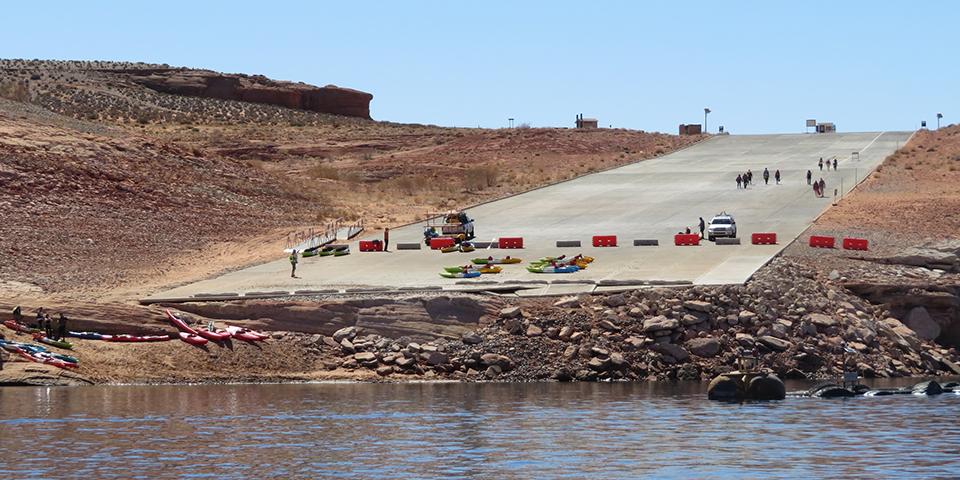
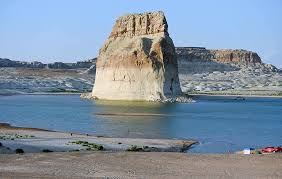
Photo Credit: Navajo Times
A Meteor With a Timestamp
There is a political meteor headed for Arizona, and most people don’t know it’s coming.
Sometime this July, the federal Bureau of Reclamation is expected to announce its final framework for Colorado River water allocations post-2026. Seven states have spent two years failing to reach an agreement. So the federal government stepped in. Its draft proposal calls for a 77.4% cut to Arizona’s water supply, while five of the seven states would face zero reductions. That is not a typo.
In politics they might call something like this an October Surprise: an issue or piece of news that pops into voters’ consciousness precariously close to Election Day and has the potential to flip everything on its head. But this October Surprise is coming early this year.
Scottsdale Is In the Crosshairs
The Central Arizona Project, the 336-mile canal system that delivers Colorado River water to central Arizona, called the federal proposal a “crushing blow.” Carefree depends on CAP for 100% of its water. Scottsdale draws roughly 70% of its supply from the same source. When the announcement lands, the question of what city leadership knew, when they knew it, and what they did about it will follow immediately.
Here is where it gets politically combustible. July is also primary season. Scottsdale City Council primaries. Legislative primaries across the state. Candidates running on slates, conservatives against Democrats, incumbents defending records. And suddenly every one of those races will be refracted through a single, unavoidable question: who protected this city’s water future, and who didn’t?
Our Lives May Permanently Change
Photo Credit: National Park Service
The gravity of this moment, if even the more favorable allocation cuts hit us, shouldn’t be understated. Even with projections of moderate cuts, we’re talking about the end of lawns. Car washes shuttered. Golf courses closing. Tourism drying up, figuratively because of the literal. Our incredible success in bringing over titans of the semiconductor industry, one of the most water-intensive industries in the world, may completely reverse like globalization hollowed out the Rust Belt. The best-case scenario is that our quality of life will not be the same…but the worst case scenario? Tough to say, but I can’t help but think of Arizona before air conditioning as a potential comparison, a place that simply becomes unhospitable.
The Comfortable Silence That Got Us Here
The honest answer is uncomfortable. Water policy in Scottsdale and across Arizona has been treated for years as a technocratic background issue: important, sure, but safely managed by agencies and experts. Residents grew sanguine. Officials who should have been sounding alarms were not. The infrastructure of complacency held…until it didn’t. And due to the failures and inaction of both of the main candidates for governor, Governor Katie Hobbs and Congressman Andy Biggs, we are in a very, very precarious place.
CAP serves four out of five Arizonans. When cuts get deep enough, everyone feels them, cities included. No one can say with certainty what the repercussions look like on the ground. That uncertainty is itself the story.
We are close to a political earthquake with no reliable damage estimates. Alliances will be fractured, traditional dynamics upended. This will be the defining issue of the 2026 Arizona election cycle. The meteor is not a metaphor. It’s a timeline.
Discover more from Arizona Progress Gazette
Subscribe to get the latest posts sent to your email.