

Seventy-five years ago this June, a patch of sun-baked Arizona scrubland with 2,032 souls and barely a half-square mile to its name became an official municipality. Nobody could have predicted what it would become. That is the Scottsdale story: humble origins giving way to something genuinely extraordinary.
The area’s bedrock dates back 1.8 billion years, and Indigenous peoples called it home for more than 8,000 years before anyone else arrived. But the modern chapter began with a man of contradictions. U.S. Army Chaplain Winfield Scott purchased 640 acres in 1888 for $2.50 per acre, planted citrus trees, built a school, and gave the place his name. A soldier-turned-pastor-turned-farmer, he laid a foundation that somehow suited everything that followed.
From Farming Town to “The West’s Most Western Town”
Scottsdale’s first six decades were quiet ones: modest farming and ranching, a handful of tourist camps, and a scattering of artists’ studios tucked into the desert light. Then the postwar boom arrived, and the world discovered what locals already knew. The climate, the wide skies, the affordable land, and a certain sun-drenched glamour drew newcomers from across the country.
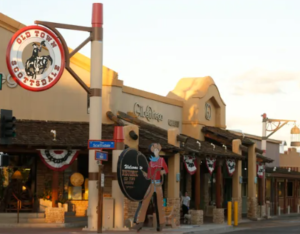
Photo Credit: AZ Central
The city’s 75th anniversary logo captures this perfectly: a spur at its center, a nod to the “West’s Most Western Town” that began its stride toward something world-class right there in Old Town.
An Arts City Almost From the Start
Frank Lloyd Wright arrived in 1937, purchasing property at the foothills of the McDowell Mountains and establishing Taliesin West as his winter home and school of architecture. It was a signal that Scottsdale would attract creative ambition, not just sun-seekers.
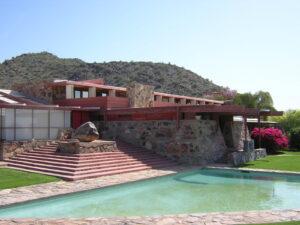
Photo Credit: Wikipedia
The arts have been part of the city’s identity since Helen Scott herself emphasized the importance of cultural life in the community. That spirit endured. Today, Scottsdale’s arts scene spans world-class galleries, the Scottsdale Center for the Performing Arts, and Canal Convergence: an annual waterfront light festival that transforms Old Town into something luminous.
Sports, Horses, and Spring Training
In 1951, the city launched what became the Parada del Sol, a beloved annual tradition now in its seventh decade. By 1956, the Arabian Horse Show had relocated to Scottsdale, becoming a signature event still held at WestWorld today. That same year, the Baltimore Orioles played the first spring training games at Scottsdale Stadium. Baseball and Scottsdale have been inseparable ever since.
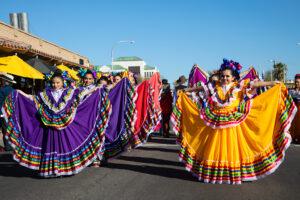
Photo Credit: Parada del Sol website
A Preserve as Ambitious as the City Itself
Perhaps no decision better defines Scottsdale’s character than the voter-approved sales tax increase in 1995 to purchase land for the McDowell Sonoran Preserve, which now stretches over 30,000 acres and stands as the city’s signature landmark. A city that could have developed every inch of its horizon instead chose to protect it. That choice says everything.
75 and Still Sparkling
This anniversary year, a community art sculpture called Sonora, a 75-inch wire horse designed by Scottsdale Artists’ School, stands in Old Town, inviting residents and visitors to add fabric and memory to its frame as the year unfolds. It is a fitting symbol: a city still being built by the people who love it.
Scottsdale began as a chaplain’s citrus farm on cracked desert earth. It became something few cities ever do: genuinely itself, at every stage of the journey. Happy 75th.
Discover more from Arizona Progress Gazette
Subscribe to get the latest posts sent to your email.