

If you’ve followed Colorado River news at any point in the last decade, you know the script by heart. Record lows, grim projections, looming cuts, repeat. Few cities have had more reason to dread those headlines than Scottsdale. This fall, however, the script finally flipped.
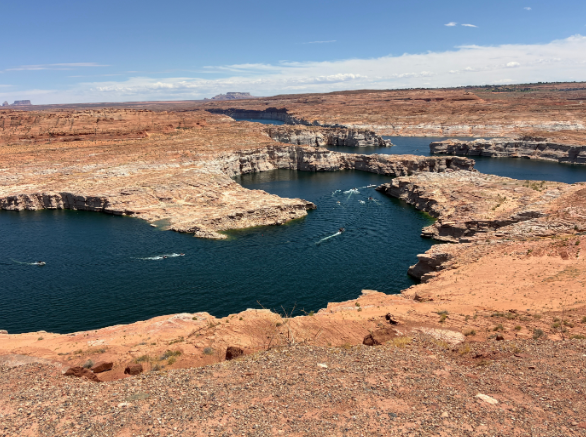
According to new reporting from KTAR News, Lake Powell sat at 3,533 feet on Tuesday. That’s 17 feet above the all-time low it hit in mid-September, thanks to an unusually wet October and early November. Meanwhile, Lake Mead, which bottomed out at its own record low on Oct. 22, has climbed two feet in under two weeks.
How Close We Came
To appreciate the rebound, it helps to remember where we were. At its lowest, Lake Powell was just 26 feet above minimum power pool. That’s the level at which Glen Canyon Dam can no longer generate hydropower. In other words, the lake was flirting with a genuine crisis, not a hypothetical one.
Mike Crimmins, a climate science extension specialist at the University of Arizona, told KTAR the rise creates “a little bit more margin” before dead pool. Lake Mead’s smaller gain makes sense, too, since its level depends largely on releases from Powell upstream.
Why Scottsdale Feels Every Foot
Readers of this site know why these numbers hit home. Roughly 70% of Scottsdale’s water comes from the Colorado River through the Central Arizona Project. Moreover, CAP holds the lowest priority on the river, so Arizona absorbs cuts first when the reservoirs drop.
We’ve spent much of this year laying out what that could mean. Federal options on the table have ranged from a 32% cut in CAP deliveries to a nearly complete one. Even the low end would push Scottsdale deep into its drought management plan. That means mandatory conservation and, eventually, surcharges that require City Council approval.
The Rain Could Pay Off Twice
The good news doesn’t stop at the waterline. Crimmins explained that fall storms recharge soil moisture, easing short-term drought right away. Furthermore, wet fall soils help more spring snowmelt reach the river instead of soaking into parched ground. If the snowpack shows up this winter, this rain could deliver a second dividend.
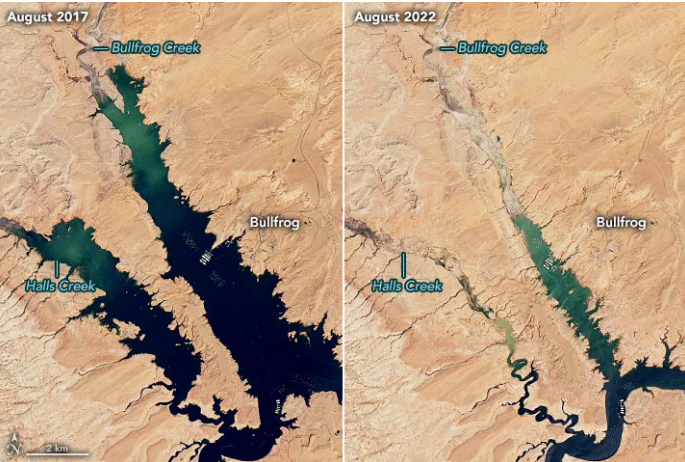
Lake Powell change. Photo Credit: NASA
This Isn’t a Victory Lap
Of course, one wet season is not a solution. It doesn’t reverse our long-term drought and years of deficits can’t be erased in weeks. We can’t expect either reservoir’s problems to be solved by spring; our best near-term hope is for a strong El Niño winter to be another step in the right direction.
A Better Hand for the New Council
Still, after years of nonstop bad news, a reprieve deserves to be called what it is. Seventeen feet won’t fix the Colorado River. However, it buys time, and time is exactly what Scottsdale needs.
A new City Council takes the dais in January. Ideally, those members will spend their terms planning for a drier future rather than rationing one. With a few more seasons like this, the worst-case scenarios we’ve written about may stay on paper. Here’s hoping this is the first good-news story of many.
Discover more from Arizona Progress Gazette
Subscribe to get the latest posts sent to your email.