

By Alexander Lomax
Arizona’s ballot is long this year. Voters will choose a governor, attorney general, secretary of state, treasurer, schools chief, mine inspector and two corporation commissioners. For the first time, they will also elect a lieutenant governor, paired on a ticket with the governor. Early ballots are already coming back, so here is how we see each race finishing on November 3.
First, the weather report. Midterms usually punish the party in the White House, and this one looks no different. Equis Research found that roughly 10% of 2024 Trump voters now back Gov. Katie Hobbs. Moreover, a HighGround survey this month showed Democrats leading in five statewide races. Republicans still hold a voter registration edge of about 300,000. However, both money and mood favor Democrats, and Hobbs alone has outspent Andy Biggs by $12 million.
Governor: Hobbs by 6
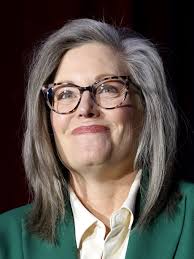
Katie Hobbs won in 2022 by fewer than 18,000 votes. This time, nobody will need to watch for a recount.
Hobbs has spent more than $17 million, compared with roughly $5 million for Biggs. Outside groups backing Biggs, led by Turning Point, have spent over $21 million. Still, the Democratic Governors Association has added $14 million, while the Republican Governors Association has spent nothing. That silence says plenty.
Biggs cruised through the primary with 74% and won Trump’s endorsement. Yet his base-first profile limits his reach with independents. Meanwhile, Hobbs chose former Mesa Mayor John Giles, who is running without a party label, as her running mate to court moderate Republicans.
Recent polls range from Hobbs +17 (HighGround) to Hobbs +5.7 (Wick). Expect Republicans to come home late. Even so, Hobbs wins by about six points.
Secretary of State: Fontes by 7
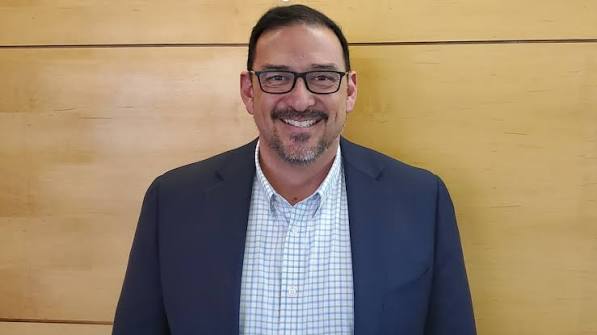
Photo Credit: KJZZ
Adrian Fontes beat Mark Finchem by about 120,000 votes in 2022. His challenger this year, Scottsdale-area state Rep. Alexander Kolodin, is a sharper opponent. He also carries baggage…lots of baggage.
Kolodin was the local attorney in the failed 2020 “kraken” lawsuit. In 2023, the State Bar admonished him and placed him on 18 months’ probation. Additionally, he wrote Prop 144, the voter ID measure on this year’s ballot.
The money gap is wide. Through September, Fontes had spent nearly $2 million to Kolodin’s $210,000. Outside groups have largely sat this one out. Polls show Fontes ahead by 6 to 12 points. Fontes wins by about seven.
Attorney General: Mayes by 4
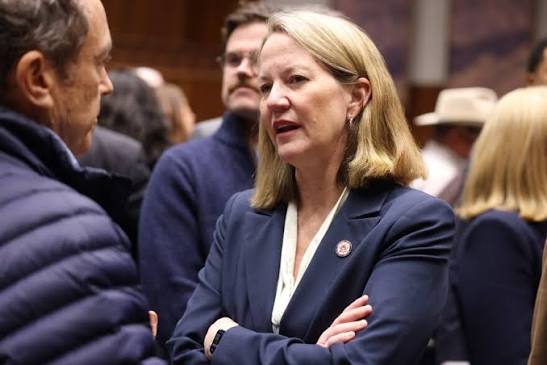
Photo Credit: KJZZ
This is the tightest of the top-tier races. Senate President Warren Petersen is well known to Republican voters and runs on a law-and-order message. Kris Mayes, meanwhile, has run an aggressive office. She has appealed utility rate decisions and even filed a criminal complaint against the prediction market Kalshi.
Mayes holds the money edge, having spent $5.4 million to Petersen’s $2.1 million. As a result, Petersen has leaned on outside help, including nearly $600,000 from Restore Order Arizona. According to the Arizona Capitol Times, a firm Mayes’s office has sued funneled $600,000 to a PAC backing Petersen. Expect Mayes to make that part of her closing argument.
Polls range from Mayes +1 to Mayes +15. In the end, she wins by about four.
Superintendent of Public Instruction: Leyba Ruiz by 3
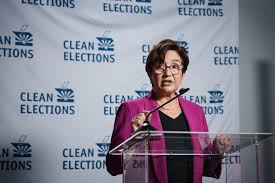
Photo Credit: KJZZ
Kimberly Yee has already knocked off one incumbent this year, beating Tom Horne by six points in the primary. She has also won statewide twice as treasurer, so voters know her name.
However, Democrat Teresa Leyba Ruiz, former president of Glendale Community College, has matched her dollar for dollar. Through September, each had spent roughly $325,000. Their sharpest divide is over public school funding and Arizona’s universal voucher program. August polling was split within the margin of error. By October, HighGround showed the Democrat ahead by high single digits. In this environment, Leyba Ruiz edges Yee by about three.
Treasurer: Norton by 2
Here is where Republicans hold the line. Elijah Norton, a former Arizona GOP treasurer, has spent more than $4.3 million, largely from $4.1 million in personal loans. Democrat Nick Mansour, a former nursing college CEO, has spent about $910,000.
That early spending bought Norton something rare in a down-ballot race: name recognition. Moreover, Republicans have held this office for decades, as voters traditionally biased towards Republicans for financial roles. The race has also turned personal, with each candidate questioning the other’s integrity.
Mansour does have one late advantage. He entered October with more than $580,000 on hand, while Norton had under $50,000. Still, in a low-information race which always biases towards the GOP, Norton’s head start should hold. Norton wins by about two.
Mine Inspector: Presmyk by 3
Les Presmyk is a rare creature: a Republican appointed by a Democratic governor. Hobbs named him to the post in 2025, and the law required her to pick another Republican. He touts more than four decades as a mining engineer and has drawn contributions from copper industry executives.
Democrat Brian Matlock, an engineer and mining project manager, questions both that résumé and that money. Presmyk counters that Matlock doesn’t meet the job’s statutory experience requirement. However, Matlock has raised only about $2,200, which isn’t enough to introduce himself to voters. In a race few people follow, incumbency and the GOP registration edge should carry the day. Presmyk wins by about three.
Corporation Commission: A Split Decision
Republicans currently hold every seat on the commission. That makes this race a referendum on utility bills, and voters are frustrated. Data center growth, rate requests and rising costs dominate the debate. Notably, about two-thirds of voters favor more regulation of data centers, according to Equis.
Democrats Clara Pratte and Jonathon Hill say data centers should pay their full infrastructure costs. Incumbent Kevin Thompson and state Rep. Ralph Heap are friendlier to data center growth. All four candidates use public financing, so money is roughly equal.
Thompson’s incumbency should keep his seat safe. Heap, meanwhile, is a first-time statewide candidate with Freedom Caucus ties, which makes him the weakest Republican in a Democratic year. As a result, one Democrat breaks through and ends the commission’s all-Republican lineup. A majority isn’t at stake, but the commission’s tone will change.
The Bottom Line
Democrats should sweep the top of the ticket and win the schools chief race. Meanwhile, Republicans keep the treasurer and mine inspector posts and hold one corporation commission seat. If turnout tilts more Republican than expected, the down-ballot races will tighten first. Either way, Arizona’s purple streak looks a little bluer this year.
Discover more from Arizona Progress Gazette
Subscribe to get the latest posts sent to your email.