

By Ronald Sampson
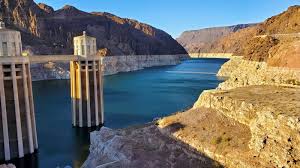
Photo Credit: Utah State University
Scottsdale has long prided itself on being one of the most forward-thinking cities in the American West when it comes to water policy. For a desert municipality that has watched the Colorado River shrink for decades, that reputation wasn’t just a point of civic pride; it was existential planning. Which is what makes a quiet but consequential development at the city’s Budget Review Commission so troubling.
At two consecutive BRC meetings this year, City Manager Greg Caton presented a Capital Improvement Plan budget with two notable omissions: the Bartlett Dam Modification Feasibility Study and the Advanced Purified Recycled Water program, the latter being Scottsdale’s much-anticipated “toilets to taps” initiative designed to supplement the city’s drinking water supply with treated, recycled wastewater. When commissioners expressed alarm, Caton’s explanation was essentially that he couldn’t put a number in the budget because he didn’t have reliable cost figures yet. “I don’t know the capital expenditure, and I don’t know the operating expenditure,” he said, “so I can’t put it in the budget.”

That is a reasonable position on its face, but it sidesteps a more pointed question: why are years of planning now being characterized as merely “aspirational”? Caton went further, asserting that Advanced Purified Recycled Water “has not been approved by a governing body to move forward,” a claim that drew swift pushback from Councilwoman Solange Whitehead, who has served on council since 2018, and former Councilwoman Linda Milhaven, who called Caton’s move an outright undermining of years of visionary investment in water security. Both point to a council-approved Water Strategic Plan 2025-2030 as clear direction to proceed.
So what is actually going on here? It is worth speculating. Caton may be running political cover for a council that is quietly divided on the issue; Councilman Adam Kwasman made his position plain, vowing to do “everything in my power” to keep recycled wastewater out of the drinking supply. If a faction of the current council is cool on the program, burying it in a budget uncertainty argument is a tidier way to stall it than taking a public vote.
The timing could not be worse. Colorado River allocations are expected to face further cuts, and Scottsdale’s existing recycled water infrastructure for golf courses, while valuable, is not a substitute for a robust residential supply solution. Removing the advanced purification program from the CIP doesn’t just delay a project; it puts the entire policy trajectory at risk at precisely the moment the city can least afford that kind of drift.
Water is not a background issue in Scottsdale. It is the issue. And the residents of this city deserve a straight answer as to whether their long-term water security is being quietly traded away for political convenience.
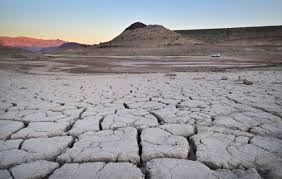
Photo Credit: CNN
Discover more from Arizona Progress Gazette
Subscribe to get the latest posts sent to your email.