

By Alexander Lomax
Give Lisa Borowsky this much: when she finally addressed the speeding ticket story on Thursday’s Mike Broomhead Show, she didn’t duck it. She explained it, clearly and calmly, and with a detail that’s hard to argue with. You can’t pay a bill nobody sent you.
What actually happened
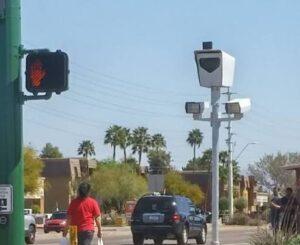
Here’s the timeline she’s working with. A speed camera caught her doing 58 in a 40 near Scottsdale and Thomas back on October 14. Nothing happened with it publicly until process servers started showing up at her house between December 30 and January 21, three visits, three misses, no one home. By February, with the case unserved, it was dismissed and purged from the system. An anonymous blogger surfaced it on social media, and only then did Borowsky say she learned the citation existed at all.
The argument she’s making
Her answer to “why didn’t you just pay it” is the strongest part of her case: she says she asked. When she found out about the ticket, she called the city and asked if she could pay it after the fact. The response, as she tells it, was blunt: “Absolutely not, it’s not an option.” She asked for a copy of the citation so she could settle it anyway. Denied again, because by then the case had already been wiped from the system. Her line on the show cuts right to it: “How could I ever have paid anything that I didn’t even know existed?”
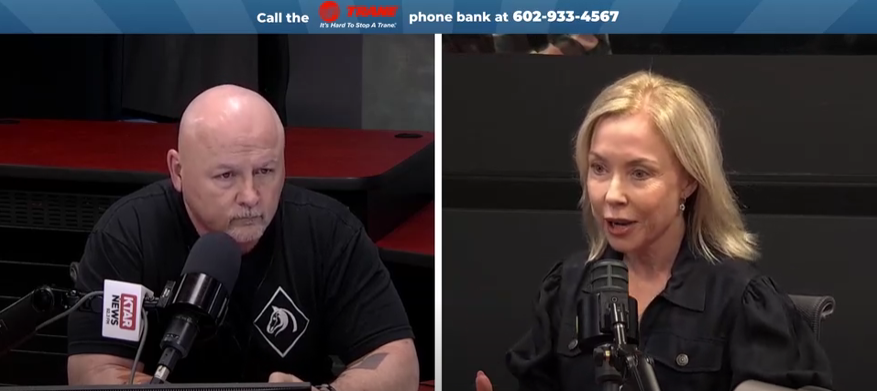
Picture from the Mike Broomhead show
That’s a genuinely hard point to rebut. If the city’s own process dismissed the case before she knew it existed, and then told her there was no mechanism to pay a dismissed, purged citation, the “she skipped a ticket” framing starts to look thinner than the “the system never gave her the chance” framing. She also floated the idea that the timing, six months of silence followed by a sudden blog post, felt engineered, tossing in an “I’m not a conspiracy theorist, but it kind of feels like a setup.” We’ll leave that thread alone. It’s the kind of line that plays well with a sympathetic radio host and invites eye rolls everywhere else, and it doesn’t actually strengthen the core argument, which stands fine without it.
A clean, deliberate appearance
What this was, unmistakably, was a controlled appearance. A friendly show, a sympathetic host, a clean narrative, delivered on her terms before anyone else could deliver it on theirs. That’s smart. That’s exactly what you do when you’re managing a story instead of letting it manage you. And on the narrow question of the ticket itself, it may well work: the facts, as she’s laid them out, are more forgiving than the initial “mayor blows off traffic ticket” headlines suggested.
The part that isn’t settled
The question worth sitting with is whether the ticket is actually the story, or just the first chapter of one. Borowsky’s office has spent the last year in one skirmish after another with a council majority that’s stripped her of agenda setting authority, blocked her staffing picks, and, as of last month, placed her chief of staff on paid suspension pending an investigation she’s publicly calling a pretext. She’s framed each of those, individually, as a coordinated effort to undercut her office. Maybe she’s right. Maybe the traffic ticket is just an unlucky, badly timed footnote to a mayor who’s already fighting a two-front war at City Hall.
Or maybe it isn’t a footnote. Because this is all reasonably explained away, UNLESS…there are other shoes to drop? Rumblings are there could be. For the mayor and Scottsdale’s sake we hope not. But the famous lyrics from Journey’s “Don’t Stop Believing” seem appropriate here and now? “Whoa, the movie never ends. It goes on and on and on and on . . . “
Discover more from Arizona Progress Gazette
Subscribe to get the latest posts sent to your email.