

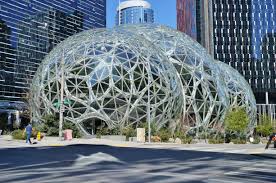
Amazon’s corporate headquarters
Wall Street delivered a harsh verdict last week when Amazon announced its fourth-quarter earnings. Despite beating revenue expectations with $213.4 billion, the stock tumbled nearly 8% after CEO Andy Jassy unveiled a staggering $200 billion capital expenditure plan for 2026, far exceeding the $146.6 billion analysts had anticipated. The message from investors was clear: the era of unlimited AI spending without demonstrated returns is over.
Amazon isn’t alone in facing this scrutiny. Microsoft saw its shares drop 7% in January despite strong results, as investors balked at aggressive AI infrastructure spending. Alphabet announced plans to spend up to $185 billion on AI capital expenditures in 2026. Meanwhile, Meta (which showed actual AI monetization success) saw its stock surge 9%. The difference? Execution matters now. The market is no longer grading tech giants on whether they can spend big, but whether they can explain why those massive checks will actually pay off.
This shift represents what analysts are calling “capex fatigue,” and it’s sending ripples through the entire tech ecosystem. S&P Global projects that hyperscalers will increase capital spending by nearly 40% in 2026, approaching $600 billion collectively. That’s an unprecedented bet on AI infrastructure, and Wall Street is starting to ask uncomfortable questions about returns on investment.

For Arizona’s booming tech sector, particularly the Phoenix metro area’s rapidly expanding “Silicon Desert,” the implications are significant. The region has attracted massive investments from companies deeply tied to AI infrastructure buildouts. TSMC’s historic $165 billion semiconductor fabrication campus in North Phoenix, Intel’s $20 billion expansion in Chandler, and sprawling data center developments from Amazon, Google, Meta, and Microsoft across Goodyear, Mesa, and Chandler all depend on continued appetite for AI infrastructure spending.
The immediate impacts will likely be limited. These projects are already underway, representing multi-year commitments that won’t be abandoned overnight. TSMC’s advanced chip plants are progressing, Intel’s fabs are being built, and the dozens of semiconductor suppliers establishing operations in Casa Grande aren’t packing up. The Phoenix area employs over 22,000 people in the semiconductor industry alone, generating more than $8 billion annually for the state economy.

Photo Credit: TSMC Arizona
But warning signs are emerging. Amazon’s stock punishment reflects investor concerns about whether AI spending will generate proportional returns. If Wall Street continues demanding results over promises, tech companies may slow expansion plans, delay new facilities, or reduce workforce projections. For a region that has branded itself as America’s semiconductor hub and data center destination, any cooling of the AI infrastructure boom could mean fewer jobs created, slower real estate development, and reduced economic spillover effects.
The Phoenix metro area’s advantage lies in its diversification. Beyond AI-focused infrastructure, the region hosts aerospace giants like Honeywell and Raytheon, cybersecurity firms, autonomous vehicle companies like Waymo, and electric vehicle manufacturers including Lucid. This diversity provides some insulation against a single-sector slowdown.
Still, Arizona’s tech leaders should watch quarterly earnings reports closely. The AI buildout remains robust for now, but the days of unchecked capital expenditures may be ending. In this new environment, results matter more than hype—and that could reshape how quickly the Silicon Desert continues its explosive growth.