

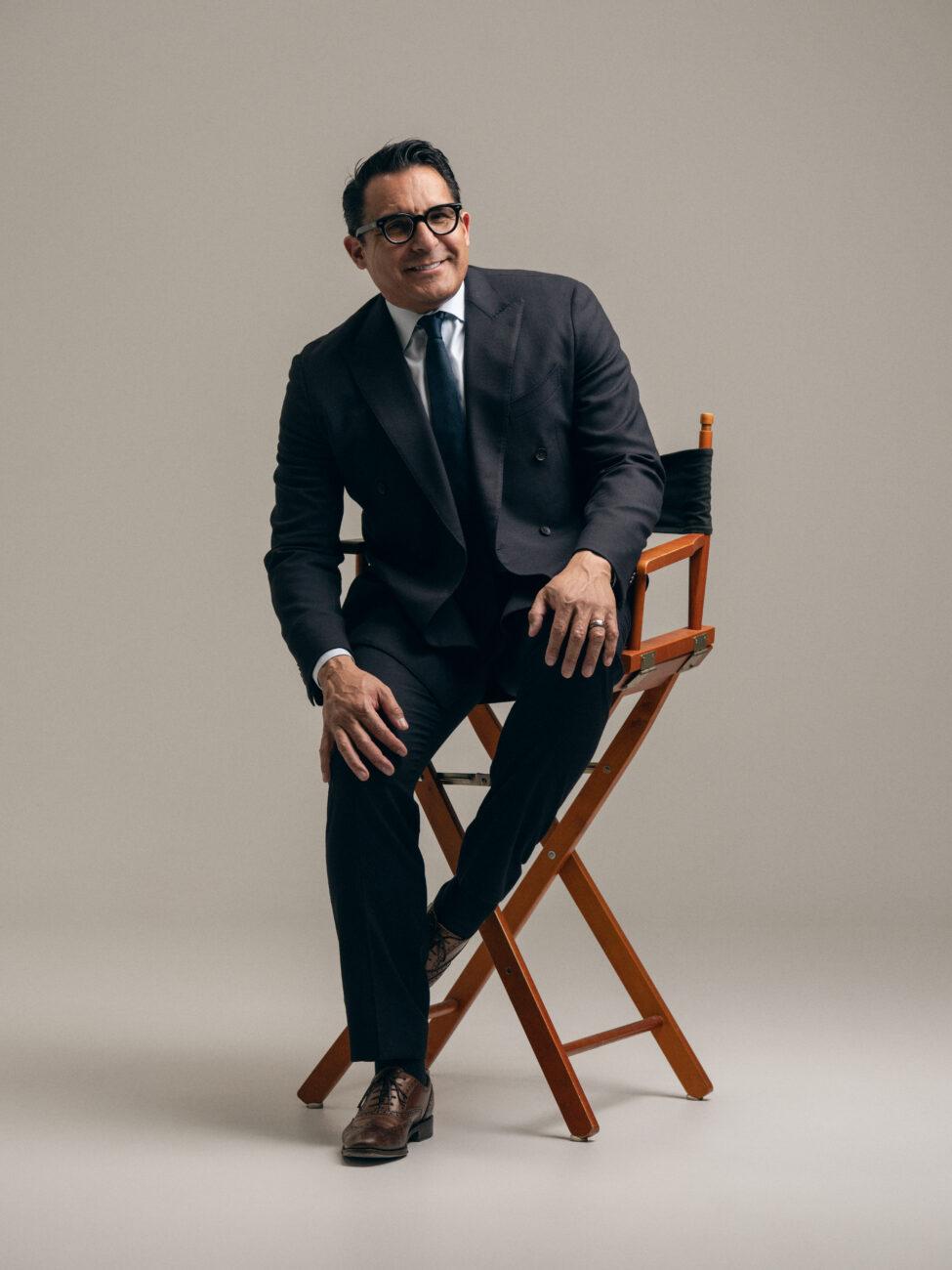
Difference Makers is our ongoing series spotlighting the people and organizations across the Valley who are quietly changing lives through their work. This installment turns the spotlight on Oscar De las Salas. Oscar has spent nearly three decades turning design into a form of civic leadership.
A Colombian-born architect trained in Bogotá, Colombia and Salamanca, Spain, he went from designing U.S. embassies abroad and doing Design Administration for the famed Italian furniture house CASSINA, to leading business development for Gensler’s Phoenix office, all while chairing Artlink and serving on the boards and committees of the Scottsdale Museum of Contemporary Art, Phoenix Art Museum, and other Valley arts institutions.
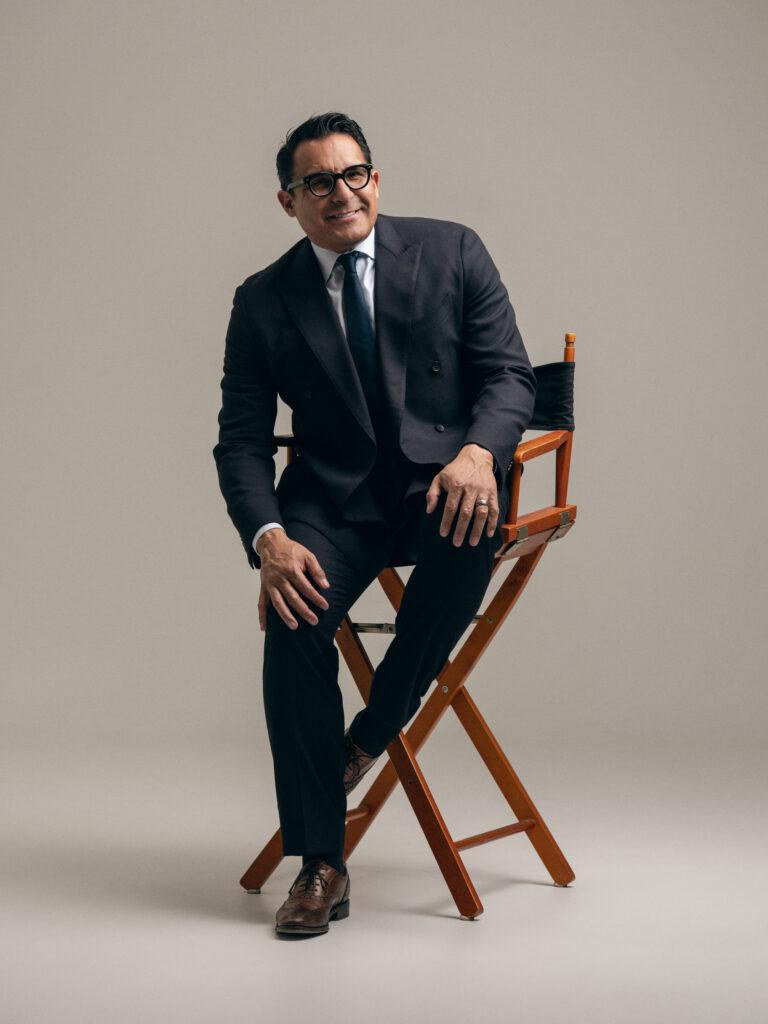
This spring he was part of the team behind the ARTrageous Gala celebrating Scottsdale Arts’ 50th anniversary, the latest chapter in a career that’s helped raise an estimated $30 million for local causes. Here, he talks about that journey, how he leads across so many rooms at once, and what keeps him showing up for this community.
- You trained as an architect in Bogotá and Spain, and your early career took you around the world designing U.S. embassies. What first pulled you toward architecture, and how did that path lead you to build a life and career here in the Valley?
I think architecture first attracted me because it sits at the intersection of art, culture, and human experience.
A building is never just a building, and a master plan is never just a master plan, both reflect who we are, what we value, and how we choose to live together.
My journey began in Bogotá and continued through my architectural education in Spain. Early in my career, I had the extraordinary opportunity to work on U.S. embassies around the world, including Bolivia, Colombia, Singapore, and Guantánamo Bay. Those experiences taught me that architecture is also a form of diplomacy. Regardless of where we come from, the spaces we create have the power to connect people, express identity, and build trust across cultures.
After completing my master’s coursework in interior architecture, I needed to fulfill a faculty requirement, “Internships”, which led me to accept a position in Padua, Italy, with a design house. I became responsible for administering the design and opening of new stores throughout the Mediterranean and Western Europe. It was an extraordinary opportunity to experience design across many European cities while expanding my understanding beyond architecture itself, from history and cultural traditions to complex technical solutions, financial operations, and the business behind design.
I came to Arizona in 1998 to pursue graduate thesis research on Frank Lloyd Wright and American Modernism.
What began as an academic journey became something much more personal. I found a profound connection to the Sonoran Desert. Its light, its landscape, its resilience, and the way architecture can respond to a place rather than simply occupy it. What seduced me the most? Its people. The desert dwellers.
Over time, Arizona became home.
I realized that what drew me here was not just the opportunity to practice architecture, but the opportunity to help shape the future of a region with an extraordinary sense of possibility. I saw a place that had the potential to lead, and a city whose vision, planning, and ambition reflected the belief that Phoenix could become a city of the future.
Today, my work at Gensler brings together all those experiences.
Through relationship building, business development, and a keen understanding of business strategy, I connect people, ideas, and opportunities to help our communities thrive. In many ways, I have never really left the world of design behind. I have simply expanded my understanding of what it means to build… not only buildings, but relationships, communities, and a lasting sense of place.
- Somewhere along the way, the work stopped being just about buildings and became about advocating for the arts and this community more broadly. Was there a specific moment that shifted you from practicing architect to community champion?
I don’t know if there was one defining moment. I think it was an evolution… a realization that the impact of architecture extends far beyond the buildings we design.
Throughout my career, working across different countries and cultures, I learned that the places we create influence how people connect, how communities express their identity, and how we understand one another. Over time, I began to see that the same principles that make great design possible… listening, building trust, creating connections, and understanding a community’s aspirations, also apply to building a stronger city.
When I first moved downtown in Phoenix, I saw a region with extraordinary potential. I connected with the artists and creatives who were helping shape the downtown scene, and I became part of the Roosevelt Row creative community in its early days. I was involved in the happenings at the Icehouse, helped design sets for fashion shows, hosted events as an emcee, and spent evenings and weekends volunteering to bring art openings to life.
At that time, art was a catalyst for creating a city, generating momentum, bringing people together, and building a sense of community. I experienced firsthand how creativity could transform not just a space, but the way people felt about a place and their sense of belonging to it.
The artists and nonprofit organizations I worked alongside recognized my interest and commitment. They invited me in, asked me to participate, and gave me opportunities to contribute to something bigger than myself. I wanted to be part of that story. Not simply as an architect, but as someone who could help bring people, ideas, and institutions together to move our community forward.
That naturally led me to become more involved in the arts, civic organizations, and international relationships.
Through organizations such as Artlink, Phoenix Sister Cities, SMoCA, and CALA Alliance, I’ve seen what becomes possible when people come together around a shared vision. The arts are essential because they give a community its voice and identity. They preserve our cultural DNA, tell stories of who we are, and give us the freedom to imagine and express what is possible.
I still see myself as an architect. I think I always will.
But my understanding of the profession has expanded. Designing a great project is important, but helping create the conditions for a great community to thrive is just as meaningful.
The most lasting impact we make is not always what we build with our hands… it’s what we help build together.
- You’ve built a life and career here that started thousands of miles away, in Bogotá and Salamanca. What part of that journey do you find yourself drawing on most when you’re deciding which causes are worth your time?
I think the greatest lesson I draw from that journey is that, while we may come from different places and cultures, we all share a desire to belong, to contribute, and to leave something meaningful behind.
Growing up in Bogotá, studying in Salamanca, and working across different countries taught me to look at the world through different lenses. My work on U.S. embassies showed me how important trust and cultural understanding are. And my experience in architecture taught me to look beyond what is immediately visible. To understand the people, the stories, and the aspirations behind a place.
That perspective is what guides me when I decide where to invest my time.
I ask myself: Does this organization make our community stronger? Does it create opportunities for people to connect, participate, and feel that they belong? Can I help expand its reach and create momentum for its mission? Are my talents and experience being put to their best use? Can I bring my relationships, business strategy, knowledge of economic development, and broader perspective to help move its mission forward?
The arts are particularly important to me because they preserve our cultural DNA. They tell us where we come from, help us understand one another, and give us the freedom to imagine where we can go.
I also believe deeply in the power of the arts to drive economic development, strengthen international relationships, and serve as a window into who we are as a community. Culture can open doors, build bridges between people and nations, and create opportunities that extend far beyond the arts themselves. And when we combine that with meaningful civic engagement, we can create opportunities that improve people’s lives.
Ultimately, I don’t think about community service simply as giving my time to an organization. I think about it as investing in the kind of city we want to become.
Phoenix has given me an incredible place to build a life and a career. I feel a responsibility, and honestly, a privilege, to give something back. To help this region realize its potential and become a place where people from different backgrounds can thrive together.
For me, that commitment is also a way of saying thank you to Arizona. A region and a state that welcomed someone who came here from somewhere else with the desire to contribute, to be part of the conversation and to help make a difference.
For me, the question is not simply which causes are worth my time. It’s where my experience, and my passion can make a difference that contributes to the betterment of it all and one that lasts not decades, ages!
- Who or what inspires you day to day, whether that’s a person, a project, or a moment that reminded you why this work matters?
I think what inspires me day to day is people… people who have a vision, who believe in something, and who are willing to put in the work to make it happen.
Throughout my career, I’ve had the privilege of meeting extraordinary people across different cultures, disciplines, and communities. What has always inspired me is that moment when someone sees a possibility that others may not see yet and have the courage to pursue it.
I find that especially in the arts and in our community. Artists, nonprofit leaders, entrepreneurs, and civic leaders often work with limited resources but an incredible amount of passion. They believe in what they are doing, and they bring others along with them. Watching that kind of commitment turn an idea into something that brings people together is incredibly rewarding.
I’m also inspired by Phoenix itself.
This is a region that is still defining what it wants to become. There is so much talent, creativity, and ambition here, and I believe we have an opportunity to shape a city that is not only economically successful, but culturally rich, globally connected, and meaningful to the people who call it home.
And sometimes, inspiration comes from something much simpler. A conversation, a new connection between two people who should know each other, or seeing an idea begin to gain momentum because someone took the time to make an introduction. That is what keeps me engaged. I love connecting the dots! Bringing people, ideas, and opportunities together and watching something happen that might not have happened otherwise.
For me, that is when the work really matters: when the relationships we build lead to something tangible, something that makes our community stronger, and something that will continue to have an impact long after the initial conversation is over.
- You’ve helped raise an estimated $30 million for Valley charities over the years. Is there one specific moment or story from that work, a person who helped or a program funded, that has stuck with you?
The large events allow me to have a broader impact, but one of the experiences I remember most clearly happened on Thanksgiving Day, when I volunteered to serve food at a shelter in downtown Phoenix.
Whenever I volunteer to serve a meal, I make it a point to have a conversation with the people I am serving. I believe that beyond providing a meal, we have an opportunity to offer something just as important. Human connection, dignity, and the feeling that someone sees you.
That morning, I sat next to a woman who was impeccably dressed, very articulate, and gracious. We began talking about her life, and she shared how a difficult relationship and a series of circumstances had left her without the money to pay her rent. She was looking for a job, trying to put her life back together, and that Thanksgiving she had no one to spend the day with. She had come to the shelter because she needed a place to sleep that night.
We talked for a while. I shared information about places where she could find help, offered some words of encouragement, and challenged her to find the discipline and determination to rebuild her life. I wanted her to know that her circumstances at that moment did not have to define her future. I left her with a list of places where opportunities could be found.
Months later, I was driving through a coffee shop when she recognized me.
She almost jump out of the window when she saw me pulling in. She came over and told me that our conversation had changed her life. She had found help through the resources we discussed, gotten a job at the restaurant, found a place to live, rebuilt relationships with her family, and even found a new partner.
She was so excited that she told the people around her who I was. Then she came over to hug me, and we both found ourselves in tears.
I will never forget that moment.
I am proud of the collective impact we have made through fundraising and the many organizations I have supported over the years. Raising millions of dollars matters because it allows organizations to expand their reach and change lives. But that Thanksgiving morning reminded me that impact is not always measured in dollars, the size of an event, or the number of people in a room.
It was not a fundraiser in a ballroom. It was a simple conversation with another human being whose life had taken an unexpected turn, but whose potential to find her way forward was still there.
That experience reminded me that we never really know what a conversation, a little encouragement, or a connection to the right resources might mean to someone who is struggling. Sometimes, we can help someone see a path forward when they may have difficulty seeing one themselves.
And that, to me, is what building a stronger community is all about. The large events allow us to reach more people, but sometimes the most meaningful impact begins with something much simpler, taking the time to see another person, listening to their story, and believing in their potential to begin again.
- Between your role at Gensler, chairing Artlink, sitting on multiple museum and civic boards, teaching at ASU, and co-chairing galas, you’re operating at a pace most people couldn’t sustain. What does your actual leadership style look like when you’re juggling that many rooms at once?
I think my leadership style has evolved over the years, just as I have evolved professionally.
At its core, it is still about solving problems, but today, I also bring a strong strategic perspective to the table.
When I first became involved in the community, I was the volunteer who showed up, rolled up my sleeves, and did the work. I spent hours on the ground helping make events happen, supporting organizations, and doing whatever was needed. I still do that, and I always will. I believe that if you care about a mission, you should be willing to contribute at every level.
But over time, something changed, things changed! As I gained experience, built relationships, and developed a deeper understanding of business strategy and economics, I found that organizations increasingly looked to me for something beyond execution. They began asking me to help them step back, see the bigger picture, navigate complex situations, and determine a path forward.
Today, I am often asked to help organizations think through their strategy, strengthen their structure, identify fundraising opportunities, rethink how they operate, and develop business plans that can support their long-term sustainability. Sometimes the challenge is financial. Sometimes it is organizational. Sometimes is branding and communication, social media these days. Sometimes an organization has a great mission but needs to rethink how it is positioned, how it engages its stakeholders, or how it builds the partnerships necessary to grow.
I have developed a keen sense of how to look at these challenges from different perspectives, identify the underlying issues, and help bring clarity to situations that may initially seem complicated. And I have reached a point in my career where my voice is heard, a point where people trust my judgment, where I am able to create consensus in a board, a point where they value my perspective, and invite me to help shape decisions, not just carry them out.
My work at Gensler reinforces that every day.
As Director of Client Relationships and Business Development, I must understand not only what our clients need today, but also where their organizations are going, what challenges they face, and how we can help them achieve their ambitions. My recent certification as an Arizona Professional Economic Developer through AAED has further strengthened my understanding of how business, investment, civic leadership, and community development intersect.
I bring that same perspective to my work with the arts and civic organizations. I don’t see these commitments as separate rooms. I see them as connected parts of a larger ecosystem. The relationships, ideas, and experience I gain in one setting often help me see opportunities in another.
And when you are involved in many organizations, you must be intentional. I cannot do everything, nor should I. My responsibility is to understand where I can add the greatest value, bring the right people together, and help create a strategy that others can believe in and execute.
So, yes, I still put on my boots and get to work. But today, I am just as likely to be helping an organization determine where it needs to go, how it needs to organize itself, and what plan will get it there.
For me, leadership is knowing when to roll up your sleeves and do the work, and when to step back, seeing the bigger picture, and helping others find the strategy that will move them forward.
- This spring you were part of the ARTrageous Gala marking Scottsdale Arts’ 50th anniversary. What did it mean to help lead that milestone celebration, and what surprised you most about how the community showed up for it?
Being participant of the ARTrageous Gala celebrating Scottsdale Arts’ 50th anniversary was a real privilege. Always is! Fifty years is more than a milestone for an organization. It is a celebration of the people, the vision, and the commitment that have helped shape the cultural identity of a community.
I have always believed that the arts are much more than something we experience in a gallery, a theater, or a public space. They are part of our cultural DNA. They tell our stories, challenge us to think differently, bring people together, and help define the kind of community we want to become.
What made this celebration especially meaningful was the opportunity to help honor that legacy while looking ahead to the next 50 years. The arts need champions! People who understand their value not only to our quality of life, but also to our economy, our identity, and our ability to attract talent, investment, and visitors to our region.
What continues to inspire me is seeing what happens when people come together around something they believe in.
A gala is one evening, but the impact behind it can extend far beyond that room. It creates momentum, strengthens relationships, and reminds us that supporting the arts is an investment in the future of our community.
And perhaps that is what I appreciate most… The realization that a thriving cultural community doesn’t happen by accident. It happens because people care enough to show up, contribute, and believe in what we can accomplish together.
For me, that is the real celebration and not simply looking back at 50 years of achievement but helping create the conditions for the next generation of artists, ideas, and cultural experiences to flourish.
- Take us through what “the work” actually looks like day to day, moving between architecture, business development, teaching, and arts advocacy. How do those different worlds inform each other?
My day-to-day work is certainly diverse… and that is exactly what I love about it.
I have never been someone who sees the world through a single lens. I am naturally curious about how things work, how people connect, and how we bring different perspectives together to create something meaningful.
At Gensler, my work in client relationships and business development goes far beyond making introductions or identifying new opportunities. It is about listening, building trust, understanding our clients’ ambitions, and helping turn those ambitions into reality. I support leadership in reviewing proposal and fiscal responsibilities, follow projects as they develop, support our teams, and staying connected with clients to make sure we are delivering on our commitments. Sometimes, the work is about recognizing an opportunity. Other times, it is about creating one that didn’t exist before.
My background in architecture and business administration allows me to look at these relationships from both a design and a business perspective. I understand how places are conceived, how they influence people’s lives, how financial health affects an organization’s ability to move forward, and how to align a client’s vision with the practical realities of making it happen.
Teaching and lecturing at ASU give me another dimension. I share what I have learned throughout my career, but I also continue to learn from the questions, ideas, and perspectives of others. Students remind me that the future is never simply an extension of the past and that sometimes, asking a different question is the beginning of a better solution.
Then there is my involvement in the arts and civic organizations. Through Artlink, museums, Phoenix Sister Cities, The Rio Reimagined board of directors, ambassador at GPEC and other community organizations, I see firsthand how culture, economic development, philanthropy, and civic leadership intersect. The arts are not separate from the business of building a city. They help define its identity, attract people and investment, create opportunities, and give people a reason to feel connected to the place they call home.
What fascinates me is how often these worlds inform one another.
A conversation through a civic organization can lead to a new relationship or opportunity at Gensler. A business strategy I help develop can strengthen a nonprofit’s ability to fulfill its mission. An international relationship can open doors to cultural exchange, investment, and new ways of thinking about our future or investing in our city and region.
I don’t see these commitments as separate worlds competing for my time.
I see these commitments as parts of a larger ecosystem, and my role is often to connect the dots. But, of course, no one does that alone!
A very special shout-out to Whitney Nelson, my executive assistant and the mastermind behind my calendar and so much of my day-to-day coordination. Whitney does far more than keep things organized. She understands how all the pieces fit together, brings incredible knowledge and guidance to my work, and helps turn what can sometimes feel like a thousand moving parts into a meaningful whole. I am incredibly grateful to have her by my side.
And I have to recognize the leadership in my Gensler Phoenix office, who not only understand my passion for our community but encourage and support it.
My boss, Martha dePlazaola Abbott, has been much more than a leader to me. She is a coach on my professional journey, someone who inspires me, challenges me, and reminds me to reach for the stars. Rory Carder has been a tremendous source of support, helping me move ideas and opportunities forward every step of the way. And our Design Director, Jay Silverberg, has an extraordinary ability to distill complex information down to its very essence. I deeply admire that talent, because clarity is often what allows a great idea to become a meaningful action.
I am fortunate to work alongside people who recognize that professional success and community impact don’t have to exist in separate worlds. When you have leaders and colleagues who trust you, support your ambitions, and help you grow, you can contribute in ways that extend far beyond your job description.
The truth is, connecting the dots takes a team. And I am grateful to be surrounded by people who help me see the possibilities, find the clarity, and turn those connections into something meaningful for our work and our community.
Ultimately, whether I am working with a client, teaching a student, supporting an arts organization, or building an international relationship, the underlying purpose is the same: understanding people, recognizing potential, and bringing the right ideas, expertise, and relationships together to make something meaningful happen, and they all have a base in strategy.
And this brings me to a concept I have been developing for a book I hope to write (two chapters ready!), something I call “The Invisible Architecture.”
Before a first line is drawn, before a building takes shape, and before a community sees a project rise from the ground, something else must happen. People must come together around a shared vision. There must be conversations, sometimes difficult ones; trust must be built; priorities must be aligned; and people from different disciplines must find common ground. There are meetings, negotiations, visioning sessions, and countless moments of listening, reconsidering, and reaching agreement.
That is the invisible architecture! The human/community/personal relationships, shared purpose, and collective decisions that make the visible architecture, structures and cities possible.
Because before we can build a place that transforms a community, we must first build the relationships that make that transformation possible. And in the end, the most important thing we build may not be a building at all. It may be the collective will to make a better future possible.
- What’s the biggest misconception people have about arts philanthropy in the Valley, or about what it actually takes to keep organizations like Scottsdale Arts thriving?
I think one of the biggest misconceptions is that supporting the arts is a luxury. Something we invest in once everything else has been taken care of.
I see it very differently. The arts are not an accessory to a thriving community. They are part of what makes a community thrive in the first place.
When we talk about organizations like Scottsdale Arts, we are talking about much more than exhibitions, performances, or cultural programming. We are talking about education, creativity, and human connection. We are talking about patients and people going through difficult times who find comfort through art, single mothers who find a moment of relief, and children discovering their own voices, creativity, and cultural identity. We are talking about tourism, economic vitality, and the quality of life that makes people want to live, work, invest, and raise their families here.
Another misconception is that philanthropy is simply about writing a check or attending a gala. Those contributions are important, of course, but keeping an arts organization thriving requires a much broader commitment.
It requires civic engagement!
Keeping the heart of an organization beating through the collective energy of the people who believe in its mission. It takes visionary leadership, responsible business practices, a sustainable financial model, strong community partnerships, committed volunteers, and people who are willing to advocate for that mission year after year. It requires passion for what we have built together, and the determination to keep building on it.
Having worked in architecture, business development, and economic development, I understand that a great vision alone is not enough. You need a strategy to bring it to life. You need to understand your audience, build relationships with stakeholders, diversify your sources of support, and demonstrate the value you bring to the community.
Arts organizations deserve that same strategic thinking and investment in their long-term sustainability.
I also believe we need to expand the conversation about who benefits from the arts. Their impact reaches far beyond the people who attend a performance or walk through a gallery, and we have the statistics, the economic markers and the research to sustain such stament. The arts help shape the identity of a place, attract talent and visitors, create opportunities for businesses, and make a region more distinctive in an increasingly competitive world. They help tell the story of who we are.
And we should never underestimate the power of beauty. Beauty is not simply an aesthetic luxury. It influences how we experience a place, how we connect with it, and whether we can imagine making it our home. It can become part of the decision to live somewhere, establish a business, attract talent, or invest in a community. Culture and creativity help make a place not just economically viable, but desirable.
That is why I believe supporting the arts is also a form of economic development and civic leadership. When we invest in culture, we invest in the kind of community we want to become.
Ultimately, organizations like Scottsdale Arts cannot thrive through the efforts of a few generous donors or one successful gala. They thrive when an entire community recognizes that their success matters. When businesses, civic leaders, philanthropists, artists, and residents see themselves as partners in sustaining that cultural legacy.
Because a great community is not defined only by the buildings it constructs or the wealth it generates. It is defined by how it makes people feel, what it inspires them to imagine, and whether it gives them a reason to belong. And the arts are at the very heart of that.
- Where do you want to see Scottsdale’s arts and design scene five years from now, and what would it take to get there?
Five years from now, I would love to see Scottsdale recognized not only as a destination for arts and culture, but as a community where arts and design are integral to how the city grows, attracts investment, and connects people to the places they call home all year round.
I would love to see an even stronger connection between Scottsdale’s extraordinary creative community, its business leaders, educational institutions, philanthropists, and civic leadership. We have the talent, the cultural assets, and the entrepreneurial spirit. The opportunity is to bring those strengths together more intentionally and create something even greater than the sum of its parts.
And I would love to see art become a much more visible part of everyday life, in our public spaces, our neighborhoods, our developments, and the places where people gather. I want young people to have greater access to creative experiences, emerging artists to find opportunities to grow, and established cultural organizations to have the resources and partnerships they need to thrive.
Most importantly, I want the creative community to be recognized as an essential contributor to Scottsdale’s economic vitality, not simply as a beneficiary of its success.
But getting there takes more than great programming, a successful gala, a cocktail party, or a gallery opening. Those experiences are important, but they are only one part of a much larger picture. It takes a shared vision, long-term commitment, and a willingness to invest in culture as part of the city’s future.
It means building stronger public-private partnerships, developing sustainable and diversified economic models, and creating opportunities for artists, creative entrepreneurs, and cultural tastemakers to contribute to the city’s evolution. It means envisioning distinctive arts districts and places with a clear identity, an intentional strategy, and a strong connection to the community. And it means making citizens active participants in that vision. Not simply audiences, but advocates, partners, and sources of ongoing support.
My background has taught me that great places don’t happen by accident. They are the result of intentional decisions, collaboration, and a clear understanding of what we want a place to become. The same is true of a thriving arts ecosystem. We need to think strategically, build relationships across disciplines, and recognize that culture, design, and economic development are deeply interconnected.
I would also love to see Scottsdale’s success inspire the broader Valley, because our cities are not competing only on jobs, infrastructure, or investment. They are also competing on quality of life, identity, creativity, and the experiences that make people want to stay, contribute, and build their future here.
Ultimately, I want us to look back five years from now and know that we did more than celebrate our cultural legacy. We strengthened it, expanded access to it, and created new opportunities for the next generation.
Because the goal is not simply to build a destination where people come to experience art. It is to build a community where creativity shapes how we live, how we connect, how we invest, and who we become. Even during those hot summer months when everyone seems ready to escape the desert.
Imagine making Scottsdale so creatively vibrant that people have reasons to stay, gather, explore, and connect all year long.
Discover more from Arizona Progress Gazette
Subscribe to get the latest posts sent to your email.