

By Vanessa Rogers
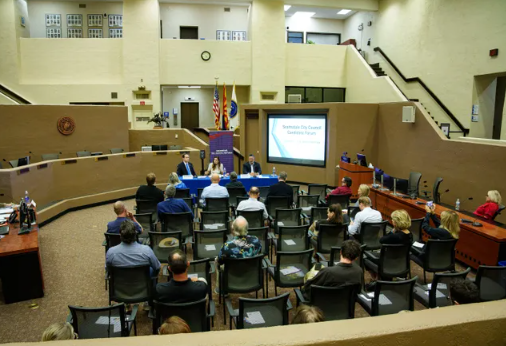
The Arizona Republic hosted a Scottsdale City Council forum that gave voters their clearest side-by-side look yet. On stage were Barry Graham, Michelle Ugenti-Rita and Raoul Zubia. The policy differences were real. However, the differences in tone may be what voters remember most.
Opening Statements Set the Tone
Graham opened on water. He said Scottsdale’s supply is secure and accused critics of fearmongering. Ugenti-Rita went another way. She argued that a diverse city cannot afford to be led by a “one trick pony.” She also criticized a one-shot voting strategy and called it “election interference”. That is a somewhat bizarre way of labeling a tactic that both parties use in various legislative districts every election season, but I digress.
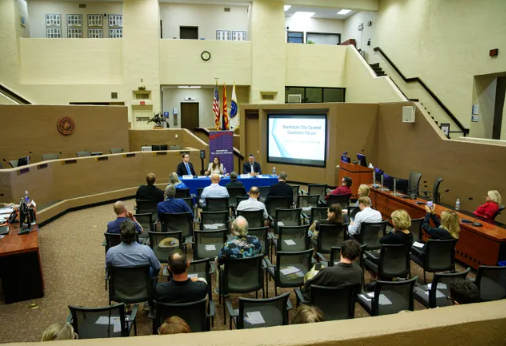
Photo Credit: Arizona Republic
Zubia, for his part, promised to stop the chaos. He leaned on 30 years in banking to argue that he understands city finances. Moreover, he framed that experience as the antidote to a council he sees as unmoored.
Water: Secure, Scarce or Just Expensive?
The candidates agreed that conservation matters, though to different degrees. Zubia said Scottsdale is not running out of water. However, he said it is running out of cheap water. That framing sits between Graham’s confidence and the alarm he criticized. Toilet-to-tap split the stage. Zubia said it is not actually a thing in reality, and Ugenti-Rita disagreed. She also deflected a bit on conservation, saying state and national governments are necessary stakeholders.
Graham then renewed his charge that Zubia leans toward multifamily housing, which uses more water. The moderator pushed back; per unit, multifamily uses significantly less water. Zubia also rejected the idea that he favors large apartment complexes. He said he backed one such project four to six years ago.
Growth and Housing
Ugenti-Rita kept returning to a single line: growth pays for itself. That sat oddly in a water conversation, especially beside her growth-hesitant approach. Zubia pointed to the experts. Ugenti-Rita rejected them and said she had done her own research. She also took a swipe at South Scottsdale. People do not live here to live like Tempe, she said, “where Mr. Zubia almost lives.” And with that attempt at a slam, Ugenti-Rita decided that it was a smart move to turn one-third of the city into a hornet’s nest that she would then kick by way of a rather elitist sounding soundbite. Someone should have told her not to.

Photo Credit: Arizona Republic
The moderator then asked what criteria each candidate would use on housing. Graham wants resident support. Ugenti-Rita pointed to the general plan. The moderator noted that the plan will eventually change and asked for her own views. In response, she went after the moderator instead. That exchange was among the tenser moments of the night. Zubia cited the general plan and the neighborhood character plan. He said he prefers two- or three-story apartments.
Technology and Data Centers
License plate readers drew a clear line. Graham was much more negative. Zubia’s answer was more mixed. He said the city is doing some good things but opposed the data collection. On data centers, Graham and Ugenti-Rita said their answers depend on the proposal. Zubia, however, was against them.
Costs and the Axon Question
Graham also raised cost overruns. Zubia blamed Covid-era inflation, and Graham disagreed. Neither side gave ground on stage. Then came the toughest question of the night, on Axon. The moderator asked why the public should believe a candidate would not do the company’s bidding, given its donation. Zubia said he was not a fan of the first plan or the current one. Ugenti-Rita asked what he had actually done about it. Zubia answered that council voted against putting the plan to a public vote. Graham said he wanted it on a special election ballot.
Style Points
The tone differed as much as the substance. Ugenti-Rita was combative with Zubia and with the moderator throughout and clearly took the attack-dog role. Graham, by contrast, was pointed but less combative, even when he pushed back hard. Zubia mostly played defense, though he kept steering back to his message.
Voters who want substance got a clear split on water, growth and technology. Meanwhile, voters who want temperament got a preview of the council each candidate would bring. In fact, the forum offered less a single knockout moment than a clear map of where each candidate stands.
But whoever wins will inherit the same water questions, the same housing pressure and the same Axon fight.
Discover more from Arizona Progress Gazette
Subscribe to get the latest posts sent to your email.