

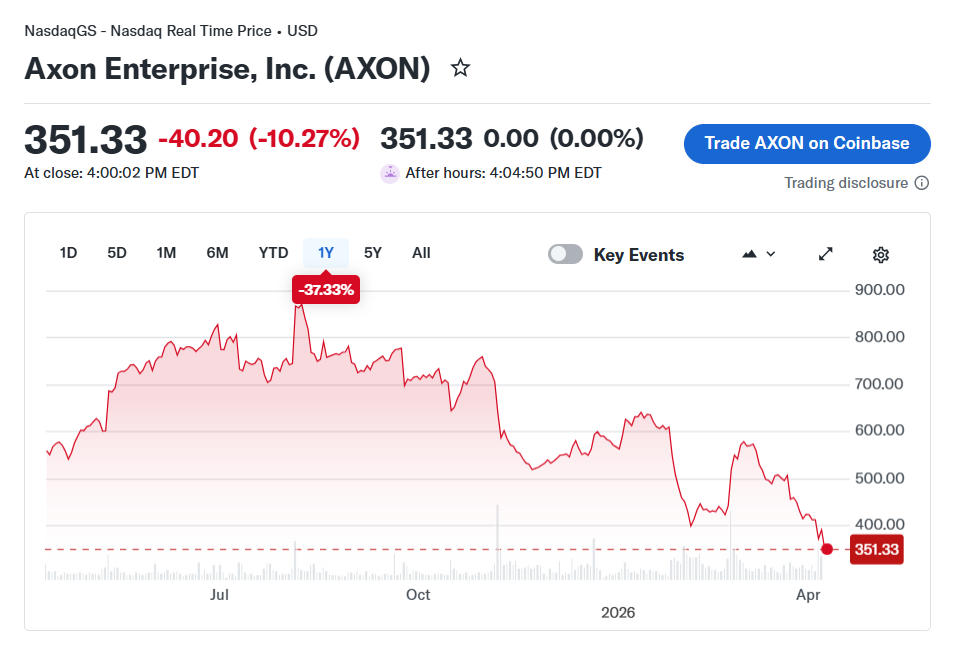
Axon Enterprise, the Scottsdale-based maker of Tasers and body cameras, has been one of the great local tech success stories of the past decade (before being one of its biggest local headaches). So it’s worth pausing to ask: what happened? As of this week, Axon shares are trading around $350, down roughly 60% from their 2025 peak above $880. In fact, it was down nearly 10% yesterday alone. That’s a stunning reversal for a company that had been a Wall Street darling for years. The causes are real, and they’re stacking up.
Earnings Missed, and Wall Street Noticed
The slide began in earnest in November 2025, when Axon reported third-quarter earnings that beat on revenue but came in well short of profit expectations. The company posted 30.6% year-over-year sales growth, but adjusted earnings per share came in $0.37 lighter than analysts had anticipated. For a stock trading at a sky-high valuation, a margin miss of that magnitude was enough to trigger a sharp selloff. The Q3 report exposed high operating cost structures that had been quietly building beneath the surface, and the quarter resulted in a GAAP net loss that set the tone for months of pain to follow.
Acquisitions Raised Eyebrows
Axon has been on a spending spree. In late 2025, the company acquired Prepared and Carbyne, two emergency communications platforms intended to power its new Axon 911 product, but the deals incurred immediate costs that contributed to the period’s net loss. The Carbyne acquisition alone carried a price tag of $625 million. While management argues the deals expand Axon’s total addressable market, investors have grown wary of whether the company is stretching its margins too thin in pursuit of growth at any cost.
Tariffs and the Broader Tech Selloff
The pain didn’t stop there. Axon’s adjusted gross margins declined year-over-year, with the CFO directly attributing the compression to tariff impacts on the company’s connected devices business, which includes TASERs and counter-drone equipment. On top of that, a broader wipeout in high-priced software and SaaS stocks, driven by concerns about AI disruption and lofty valuations, pulled Axon down alongside its peers. Insider selling by directors and executives during the period only added fuel to the skepticism. A multi-factor analysis offers useful context on how quickly the valuation reset once margin concerns took hold.
And Then There’s the Scottsdale Apartment Megacomplex Saga
While all of that played out on the balance sheet, Axon was simultaneously waging a very public war against its own neighbors. Residents organized under the group Taxpayers Against Awful Apartment Zoning Exemptions collected enough signatures to force a ballot referendum on Axon’s plan to build a campus that included nearly 2,000 residential units, a hotel, and commercial space on 76 acres in North Scottsdale. Rather than engage with the opposition in good faith, Axon CEO Rick Smith went to the state legislature to back a bill specifically designed to cancel the election Scottsdale residents had organized to hold. The company ultimately reached a scaled-back compromise but the legal battles are still ongoing, with oral arguments in a constitutional challenge to the state law scheduled for April 10. The Arizona Mirror’s detailed accounting of the legislative maneuver remains the most thorough record of how aggressively Axon fought to sidestep a public vote.
Perhaps Some Perspective Is in Order
Axon is still a strong business. Its technology leads the law enforcement market, its software revenue continues to grow, and its long-term contract backlog is enormous. A recovery is certainly possible, and some analysts still see meaningful upside if the company can stabilize margins and resolve its headquarters uncertainty. But Axon has spent the better part of a year fighting the people of Scottsdale rather than focusing on the operational and financial challenges that have punished its shareholders. A company navigating margin compression, expensive acquisitions, and a sector-wide selloff probably cannot afford to also be the villain in a local democracy story. It’s time for Axon to set down the legislative lobbying, make peace with its community, and focus its considerable energy on the business that made it worth fighting over in the first place.
Discover more from Arizona Progress Gazette
Subscribe to get the latest posts sent to your email.