

By Bedouin Bourdain
There are destinations you visit, and then there are destinations that visit you, that take up permanent residence somewhere behind the eyes. Malta and Sicily are the latter.
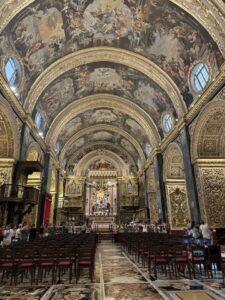
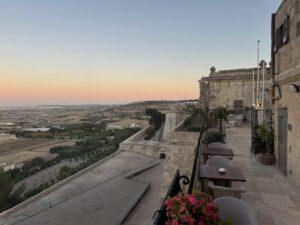
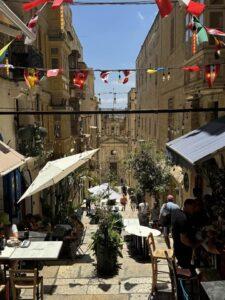
Malta arrives like a movie set no one told you was real. Baroque gold drips from the ceiling of St. John’s Co-Cathedral in Valletta, a vault of painted heavens so relentlessly opulent it borders on hallucination. Step outside and the limestone streets unfold into sun-drenched staircases draped with international flags, outdoor cafés spilling down toward some distant church portal, locals and wanderers sharing the same unhurried afternoon. Then the sun drops over Mdina’s ancient walls, painting the Maltese countryside in peach and rose, and you understand why people have been fighting over this tiny island for millennia. Positioned improbably between Tripoli, Tunis and the Italian boot, it is, to borrow the only word that fits, a bull’s eye.
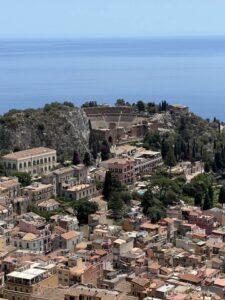
Two hours north by ferry sits Sicily, and specifically Taormina, a town that shouldn’t exist at this altitude of beauty. It clings to its hilltop with the confidence of something that has survived Greek, Roman, Arab and Norman ambitions, gazing out over the Ionian Sea like it has seen everything and remains unimpressed. The ancient Teatro Greco sits impossibly above the terracotta rooftops, open to an ocean horizon that makes the Mediterranean feel infinite. Think the drama of Cinque Terre, the romantic density of Venice, then strip away everything derivative and replace it with its own fierce, singular identity.
Together, these two places form a kind of Mediterranean argument: that the oldest corners of the world are often the most alive. That the dart board of travel, thrown blindly toward the ancient and the obscure, sometimes lands exactly where it should.
Both will rearrange something in you. Plan accordingly.
Malta and Sicily are best visited in late spring or early autumn. Valletta, Mdina, and Taormina are all walkable and deeply rewarding on foot.